The Short Answer
This page is for private clinics and dental practices in Hong Kong whose front desk spends a large part of every day on repetitive patient messaging: confirmations, reschedules, recall reminders, chasing no-shows. If your reception team comfortably keeps up and recalls aren't slipping, your current setup is fine and you don't need this. Agent88 fits when that administrative messaging load has outgrown the people doing it, and you want it handled as a managed workflow with staff review. No chatbot talks to patients on its own.
- Keep what you have if appointment volume is low enough that confirmations and recalls happen reliably by phone and nothing is falling through. A working front desk doesn't need replacing.
- Agent88 fits when the repetitive messaging is crowding out the work only humans can do (walk-ins, billing questions, coordinating with specialists) and you want the routine layer prepared for staff to approve.
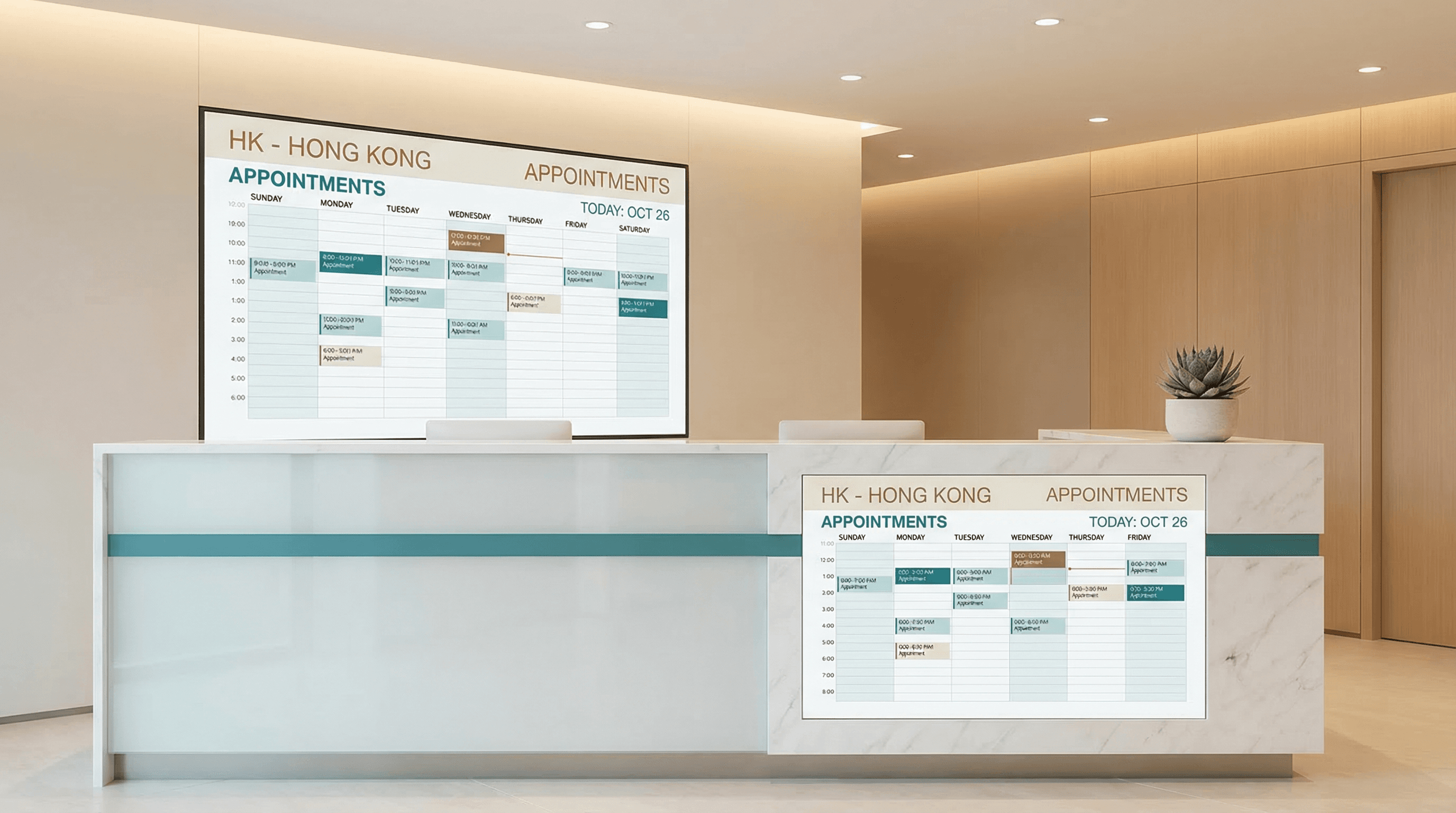
A concrete example: the evening before clinic, the agent drafts tomorrow's WhatsApp confirmations from the booking list and holds them for front-desk approval. A patient replies asking to move Thursday's scaling appointment to next week; the agent proposes open slots, and once the patient picks one, updates the booking and drafts the new confirmation. This morning's no-show gets a polite rebooking message queued for staff sign-off in the afternoon.
On trust: nothing reaches a patient unreviewed. Messages run on templates and flows your staff approved, anything outside them is drafted and held for a human, and the agent never gives medical advice and never triages symptoms. Clinical questions always go to your staff.
What the Agent Handles: Administrative Work Only
An agent deployed through Agent88 in a clinic setting is deliberately scoped to the structured, repetitive communication around care. The care itself is out of scope.
Appointment confirmations and reschedules. Drafting the confirmation batch, handling "can I move it" replies against real availability, and updating the booking once staff or the approved flow confirms it.
Recall reminders. The most neglected admin task in private practice. The agent works through the recall list systematically (six-month check-ups, hygienist visits), sending the reminder, waiting for a reply, offering booking options, and following up once if there's silence. Patients who don't respond get surfaced to staff instead of forgotten.
No-show follow-up. A missed appointment triggers a drafted rebooking message for staff approval, so the follow-up actually happens instead of joining the end-of-day pile.
Pre-visit logistics. Sending intake or consent form links before the visit and chasing incomplete ones. Note the boundary: the agent handles the logistics of getting forms out and back. It is not processing clinical content, and anything a patient writes that looks clinical is flagged straight to staff.
Routine questions. Opening hours, location, parking, which insurers the practice works with, answered from a list the practice has approved. Anything off-list goes to a human.
What It Deliberately Does Not Do
This matters more in a clinic than anywhere else, so it's worth stating plainly. The agent does not give medical or dental advice. It does not triage symptoms, interpret results, or answer "should I be worried about this" messages. Those are escalated to staff with the full conversation context, immediately. It does not touch clinical records. And nothing it drafts reaches a patient without running on a flow your staff approved or being held for human review.
If a patient messages "my tooth still hurts after the filling, what should I do?", the correct behaviour is a handover: the agent tells the patient a member of staff will get back to them, and puts the thread in front of a human.
The PDPO Question
Health data is among the most sensitive personal data a Hong Kong business can hold, and the Personal Data (Privacy) Ordinance applies to every part of how a practice collects, stores, and uses it. We won't tell you an AI agent makes any of that easier, and no vendor can honestly claim a tool "is PDPO compliant". Compliance depends on your practice's own data flows, consents, policies, and retention practices.
What we can describe is the deployment architecture: private deployment options, reviewed data flows, and human approval boundaries exist precisely so your practice can assess the setup against its own obligations. The PCPD has published guidance on AI and personal data; read it, and confirm the specifics with your legal adviser before any system touches patient data.
Our default scoping for healthcare deployments reflects this: administrative workflows only (bookings, reminders, rebooking, logistics) and never clinical records processing, unless the practice has taken its own legal advice and decided otherwise.
"My Patients Won't Use This"
This is the most common objection from practitioners, and usually the weakest, because the agent isn't asking patients to adopt anything. It works over WhatsApp Business, the channel most Hong Kong patients already use to message businesses. No app to download, no portal to log into; the interaction feels like texting the clinic, because that's what it is.
Patients who prefer to phone still phone, and the front desk has more room to pick up, because the routine message traffic isn't competing for the same hands.
What Changes for the Front Desk
Not headcount. The receptionist stops spending half the day on phone-tag and batch messaging, and keeps everything that actually needs a person: walk-ins, billing disputes, coordinating with specialists, and every judgment call the agent escalates. If you're weighing this against adding another admin hire, we've written up that comparison honestly in our guide to alternatives to hiring an admin assistant.
We prefer to show this working. See how we evidence deployments.
See One of Your Workflows Mapped
The fastest way to evaluate fit is seeing one of your workflows mapped end to end. Pick the one that hurts most (the recall backlog, the morning confirmation scramble, no-show follow-up) and we'll walk through exactly how it would run, including where every human approval point sits and what never leaves staff hands.
FAQ
Q: Will the agent answer patients' medical or dental questions? No, never. The agent handles administrative messaging only. Anything clinical (symptoms, treatment questions, results, "is this normal") is escalated to your staff with the conversation context. That boundary is fixed. It cannot be configured away.
Q: How does this sit with the PDPO, given how sensitive patient data is? We don't claim PDPO compliance. No vendor honestly can, because compliance depends on your practice's own data flows and policies. Deployments are built with private deployment options, reviewed data flows, and human approval boundaries so you can assess the architecture against your obligations, and we scope healthcare work to administrative workflows only. See our PDPO-conscious deployment guide, and confirm specifics with your legal adviser before anything touches patient data.
Q: Does this replace our receptionist? No. It's a workflow layer that prepares and routes routine messaging so your people spend their time on patients instead of copy-paste. For where an agent genuinely differs from a human assistant, and where it doesn't, see our AI agent vs virtual assistant comparison.
Q: Does it work with our existing booking system and WhatsApp number? It connects to your existing WhatsApp Business number and works alongside your booking setup; the exact integration depends on what you run, which is precisely what a workflow teardown establishes before anything is deployed.